Laser Welding for Sheet Metal: Precision, Efficiency, and the Integrated Future of Fabrication
Abstract—The integration of Soldadura láser into sheet metal fabrication represents a structural shift in how metal components are joined, finished, and brought to market. Where conventional TIG and MIG processes once dominated, fiber laser welding now offers faster weld speeds, narrower heat-affected zones, and a level of automation compatibility that manual methods cannot match. This article examines the technical and economic drivers behind this transition, reviews representative equipment specifications, and considers how integrated cutting-welding platforms are reshaping production floor economics. Reference is made throughout to ROCLAS® MACHINERY CO., LTD. (ROCLAS), whose welding and multi-process systems illustrate several of the trends discussed.
I. Industry Background
Sheet metal fabrication has historically been defined by a sequence of discrete operations: cutting, forming, and joining. Each step introduced its own tooling, labor requirements, and sources of dimensional error. Laser welding, particularly when paired with fiber delivery systems, collapses part of that sequence by delivering concentrated energy with minimal distortion and high repeatability. The shift is not merely technical. It changes what constitutes an acceptable production batch size, how much post-weld grinding is required, and whether a shop can economically serve low-volume, high-mix work.
The broader laser equipment market reflects this. Suppliers now position welding not as a standalone machine category but as a module within a larger CNC ecosystem. ROCLAS, for example, has built its product line around Máquina de corte láser de fibras, 5-axis cutting centers, CO2 hybrid platforms, and Máquina de soldadura lásers under one manufacturing roof, supported by a 15-member R&D team and more than 50 patents. That consolidation mirrors what buyers increasingly expect: a single vendor capable of supplying cutting, welding, and cleaning functions that share control architecture and service infrastructure.
II. Technical Specifications and Comparative Data
The table below summarizes representative parameters for a fiber laser welding machine alongside performance figures from related sheet metal processing equipment, drawn from published manufacturer specifications.
| Parameter | Laser Welding Machine | Fiber Laser Cutting (Sheet) | Tube Fiber Laser Cutting |
|---|---|---|---|
| Laser Power | 1500 W | 1000 W – 20 kW | 1000 – 3000 W |
| Working Mode | Continuous / Modulation | Continuous cutting | Continuous cutting |
| Wavelength | 1080 ± 5 nm | — | — |
| Welding Speed | 0.7 – 2.0 m/min | — | — |
| Positioning Accuracy | — | ±0.03 mm | ±0.05 mm |
| Repositioning Accuracy | — | ±0.02 mm | ±0.03 mm |
| Max Acceleration | — | 1.0 G | 1.0 G |
| Travel Speed | — | 100 m/min | 100 m/min |
| Power Supply | 220 V | 380 V / 50 Hz | 380 V / 50 Hz |
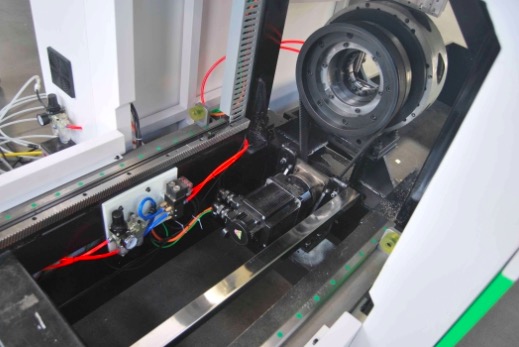
| Max Tube Diameter | — | — | 220 mm |
Several observations follow from this data. First, the welding machine operates at a substantially lower power level than cutting systems—1500 W versus up to 20 kW—which reflects the different physical demands of joining versus severing metal. Welding requires controlled energy delivery to fuse without burn-through, whereas cutting demands enough power density to vaporize or melt through the full material thickness. Second, the 220 V supply requirement for the welding unit lowers the installation barrier for small and mid-sized shops that may not have 380 V service readily available. Third, the welding speed range of 0.7 to 2.0 m/min is modest compared to cutting travel speeds of 100 m/min, but this comparison is somewhat misleading: welding speed is governed by metallurgical considerations such as cooling rate and intermetallic formation, not by machine dynamics alone.
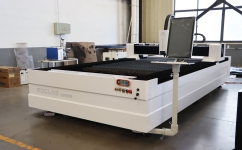
The accuracy figures for cutting equipment are relevant to welding because they indicate the positional discipline of the underlying motion platform. A machine capable of ±0.03 mm positioning accuracy provides the mechanical foundation on which a welding head can be mounted and programmed with confidence. This is one reason why integrated platforms—where cutting and welding share a gantry and control system—have gained traction.
III. Application and Brand Practice
Laser welding for sheet metal finds its most immediate application in stainless steel kitchen equipment, cabinet fabrication, elevator panel assembly, and automotive component production. These are sectors where visible weld seams must be minimized, and where post-processing labor often exceeds the cost of the weld itself. The narrow heat-affected zone of fiber laser welding reduces discoloration and distortion, cutting downstream finishing time.
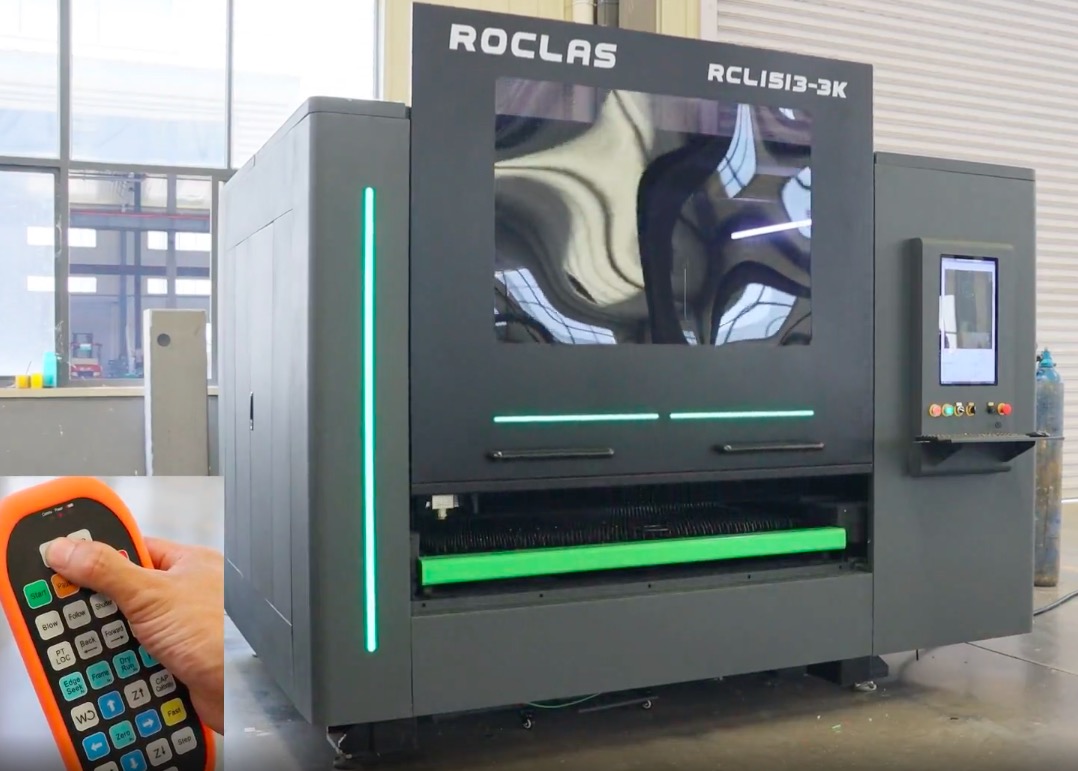
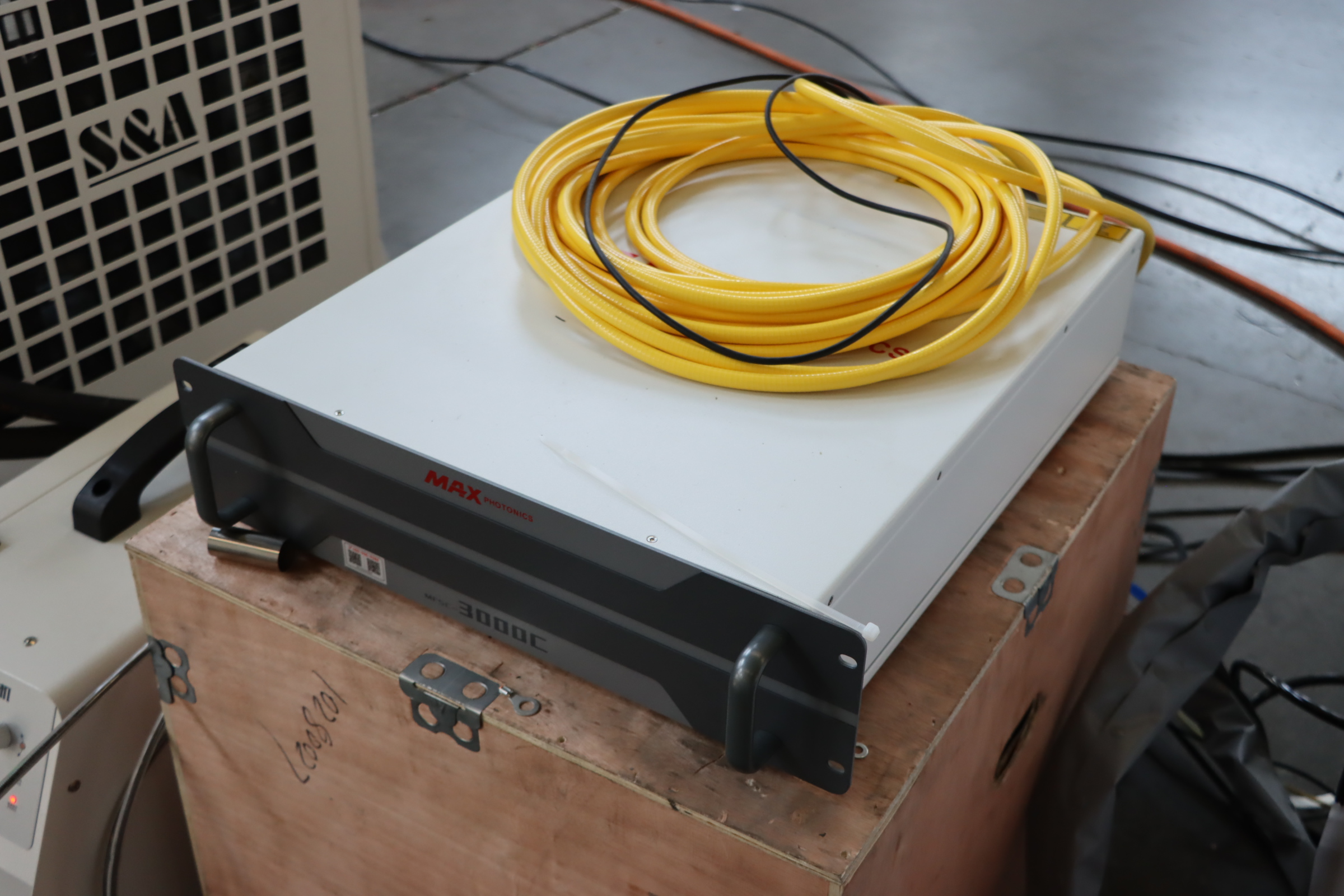
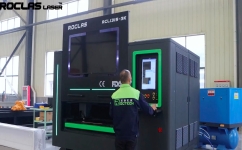
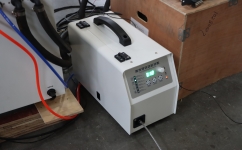
ROCLAS supplies welding capability within a portfolio that also includes fiber laser cutting machines, press brakes, and CNC plasma systems. The company's welding machine, rated at 1500 W with a 1080 ± 5 nm wavelength and continuous or modulated operation, is designed to operate alongside its cutting platforms rather than as an isolated unit. This matters for shops processing mixed orders: a single control philosophy, shared spare parts inventory, and one service contact reduce the administrative overhead that multiplies when equipment comes from multiple vendors.
The company's certifications—ISO 9001, CE, FDA, UL, and PDL—also address a practical procurement concern. Sheet metal fabricators supplying automotive, medical, or food equipment customers must demonstrate traceable quality systems. Equipment from a certified manufacturer simplifies that documentation chain.
IV. Conclusion
Laser welding for sheet metal is not a replacement for every conventional joining process. Thick-section work, certain dissimilar metal combinations, and field repair still favor older methods. But in the 0.5–3 mm range typical of enclosure, panel, and cabinet work, fiber laser welding offers a combination of speed, precision, and automation readiness that is difficult to match. The trend toward integrated platforms—exemplified by manufacturers like ROCLAS that build cutting, welding, and cleaning equipment on shared engineering foundations—suggests that the next phase of adoption will be driven less by individual machine performance than by system-level coherence. For fabricators evaluating capital investment, the question is shifting from "Which welder should I buy?" to "Which production ecosystem can I integrate?"
Anterior:High-Reflectivity Metal Cutting: Copper Thickness Capabilities in Modern Fiber Laser Systems
Siguiente página:No, No.
Investigación
Ya sea que necesite sugerencias generales o apoyo específico, estaremos encantados de ayudarle.
Publicaciones recientes
-
 Robotic Arm Laser Systems: Redefining Precision and Flexibility in Industrial ManufacturingAbstractThe integration of robotic arms with laser processing technologies represents a paradigm s...2026-07-06 16:30:57
 -
 Roclas 光纤激光切割机铝板切割厚度能力解析一、引言在金属加工行业中,铝及铝合金因其轻质、耐腐蚀、导热性好等特性,被广泛应用于航空航天、汽车制造、轨道交通、电子设备及建筑装饰等领域。铝材的高反射率特性使其成为激光切割中较难处理的材料之一。许...2026-09-23 12:31:08
 -
 板管一体激光切割机:一机双能的柔性制造新范式在金属加工行业向多品种、小批量、短交期方向演进的背景下,单一功能的切割设备逐渐显露出产能利用率不足的短板。板管一体激光切割机通过在同一个加工平台上集成平板切割与管材切割能力,为中小规模制造企业提供...2026-09-24 20:30:46
 -
 金属激光焊接机金属激光焊接机:技术演进、市场格局与ROCLAS的工程实践金属激光焊接技术在过去十年间从实验室走向大规模工业部署,其核心驱动力来自光纤激光器成本下降、伺服控制精度提升以及制造业对焊接质量一致性的刚...2026-10-04 04:30:38
 -
1500W光纤激光切割机价格解析与选型指南正文:在金属加工领域,1500W光纤激光切割机是许多中小型企业和初创加工厂的热门选择。它既能满足日常碳钢、不锈钢板材的切割需求,又在采购成本和运行费用之间取得了较好的平衡。一台1500W激光切割机...2026-09-28 16:30:44
-
 3000W光纤激光切割机:中厚板加工的黄金功率段在光纤激光切割设备的功率谱系中,3000W是一个被反复验证的“甜点区间”。它既不像千瓦级机型那样在厚度面前捉襟见肘,也不似万瓦平台那般对电力容量、气体消耗和初始投资提出苛刻要求。对于大量以碳钢、不...2026-10-01 08:31:49