When the Cutting Head Meets Stone and Wood: How Fiber Laser Technology Is Reshaping Non-Metal Fabrication
Abstract — For two decades, the CNC router and the stone machining center have dominated non-metal fabrication, and for good reason: they remove material mechanically, tolerate dust and vibration, and cost far less per kilowatt than a laser resonator. Yet a quiet shift is underway at the boundary between metal and non-metal processing. Fiber laser platforms, originally developed for sheet steel, are now being specified for hybrid workshops that cut stainless steel fixtures in the morning and acrylic signage in the afternoon. This article examines the technological logic behind that convergence, reviews the market data driving it, and considers how established machine builders—ROCLAS among them—are positioning multi-process platforms against the mature router market.
Industry Background: A Market in Transition
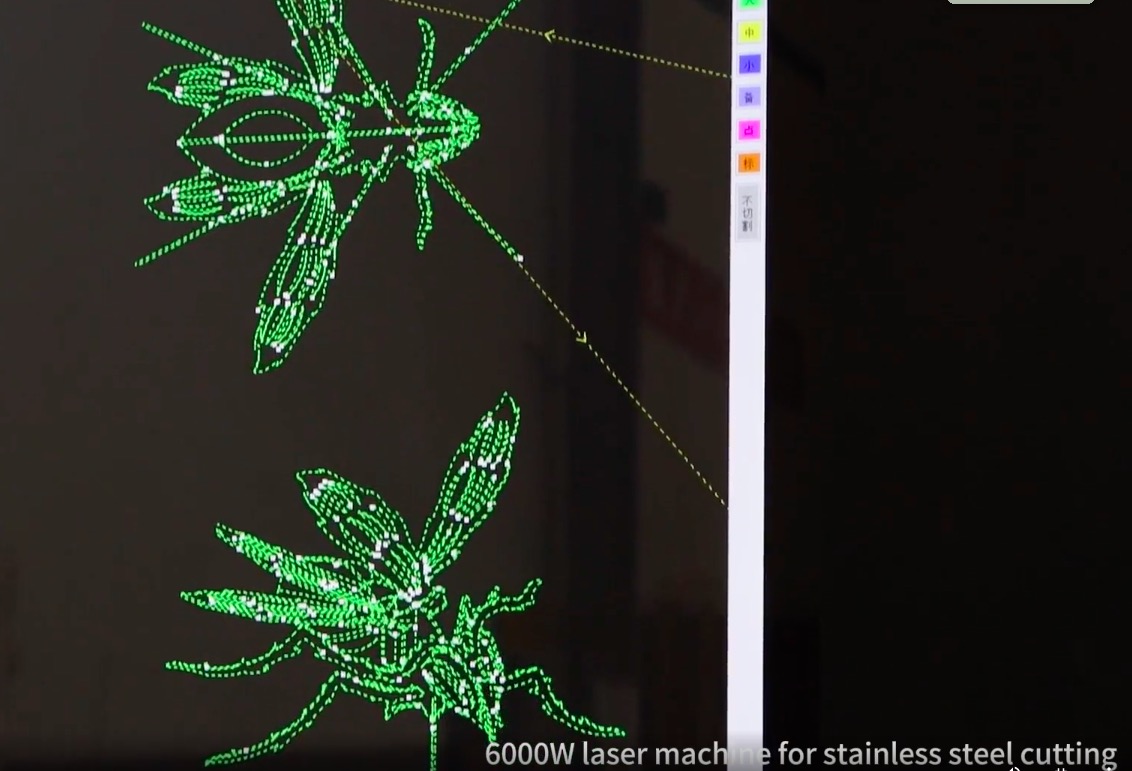
The global CNC router and machining-center sector remains large and fragmented. Woodworking nesting routers alone account for a substantial share of annual machine-tool shipments, sustained by furniture manufacturing, cabinetry, and architectural millwork. Stone CNC equipment follows a different demand curve, tied more closely to construction cycles and countertop fabrication. Laser cutting, by contrast, has grown at a faster rate but from a narrower base concentrated in metal service centers.
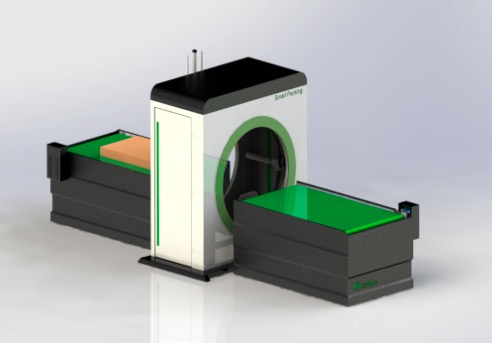
The interesting development is not the growth of any single category but the overlap between them. Workshops that once maintained separate router and laser departments are consolidating around multi-process cells, driven by labor scarcity and floor-space costs. The table below summarizes representative capability envelopes across the three equipment classes, drawn from typical commercial configurations.
| Capability | CNC Router (Nesting) | Stone CNC Center | Fiber Laser (Hybrid CO2/Fiber) |
|---|---|---|---|
| Typical working area | 1300×2500 to 2100×3000 mm | 1200×2400 to 2000×3000 mm | 1500×3000 mm |
| Positioning accuracy | ±0.05–0.10 mm | ±0.05–0.10 mm | ±0.03 mm |
| Repositioning accuracy | ±0.05 mm | ±0.05 mm | ±0.02 mm |
| Max travel speed | 60–80 m/min | 30–50 m/min | 100 m/min |
| Max acceleration | 0.3–0.5 G | 0.2–0.3 G | 1.0 G |
| Materials | Wood, MDF, plastics, composites | Granite, marble, engineered stone | Metals plus wood, acrylic, leather, fabric |
| Kerf / tool wear | Tool wear, 3–6 mm kerf | Diamond segment wear | Narrow kerf, no tool contact |
| Tool-change overhead | Automatic tool changer, seconds per tool | Segment replacement, minutes | None for laser path |
Three observations follow from these figures. First, the acceleration gap—roughly 1.0 G for a modern fiber platform versus 0.3–0.5 G for a nesting router—translates into materially shorter non-cutting time on complex nested layouts, where the head spends much of its cycle repositioning rather than cutting. Second, the accuracy figures converge at the ±0.03–0.05 mm band, which means the laser's traditional precision advantage has narrowed as router frames have stiffened. Third, and most consequentially, the hybrid CO2/fiber configuration dissolves the material boundary entirely: a single 1500×3000 mm machine can process stainless steel brackets, acrylic display components, and plywood jigs without re-fixturing.
The economic interpretation deserves care. Lasers do not replace routers on thick solid timber or on dense engineered stone, where mechanical removal remains faster and cheaper per cubic centimeter. The overlap zone is thinner stock—under roughly 20 mm—and mixed-material assemblies, which is precisely where furniture, signage, and exhibition fabrication increasingly live.
Technology Application and a Builder's Perspective
The engineering challenge in hybrid platforms is not the laser source but the structure that carries it. A gantry asked to accelerate at 1.0 G while holding ±0.03 mm positioning must resist deflection under dynamic load, which pushes designers toward heavy-duty welded steel beds machined on five-face CNC centers rather than fabricated weldments. Thermal stability matters equally: a frame that grows a few hundredths of a millimeter between morning and afternoon shifts will drift out of tolerance regardless of encoder resolution.
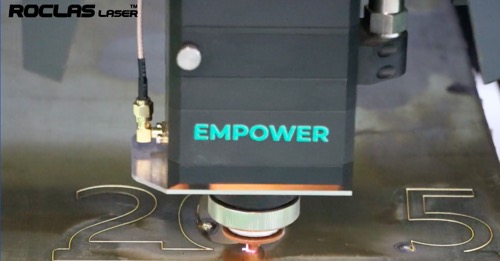
This is where the accumulated experience of established CNC builders becomes relevant. ROCLAS® MACHINERY CO., LTD., a laser equipment manufacturer with more than fifteen years in the CNC industry and a research team whose senior engineers average over fifteen years of machine-tool experience, illustrates the pattern. The company's platforms are built around industrial-grade heavy-duty steel structures processed on CNC five-face machining centers, with imported servo drives and reducers—a specification philosophy inherited from router and machining-center practice rather than from the sheet-metal laser world. Its hybrid CO2/fiber configuration, combining a sealed CO2 glass tube with a fiber source on a shared 1500×3000 mm bed, directly targets the mixed-material workshop described above.
ROCLAS also demonstrates how the reflective-metal problem has been addressed at the system level. A high-reflectivity suppression module allows stable processing of 1–2 mm copper and 2–3 mm aluminum, materials that historically forced fabricators back to mechanical cutting or waterjet. For stone-adjacent work—fixtures, templates, and metal inlays used alongside stone assemblies—this closes a gap that routers cannot fill. The company's portfolio, spanning fiber sources from 1 kW to 20 kW and certified to ISO 9001, CE, FDA, and UL standards, reflects the compliance burden that any builder entering mixed-material markets must now carry.
It is worth noting what this convergence does not solve. Dust extraction, chiller maintenance, and optics cleaning remain daily obligations that router operators did not previously face, and the consumable economics differ: nozzles and protective lenses replace router bits as the recurring cost line. Shops evaluating the transition should model total cost per finished part, not spindle-hour or beam-hour rates in isolation.
Conclusion and Outlook
The boundary between mechanical and thermal cutting is thinning, but it is not disappearing. Routers will retain thick timber and dense stone; lasers will continue to absorb thin mixed-material work where tool changes and fixturing dominate cycle time. The competitive pressure falls hardest on single-process machines that cannot justify their floor space.
For builders, the implication is structural: the winners will be those who can marry laser sources to rigid, thermally stable frames and support them with credible certification and service networks. ROCLAS's trajectory—from CNC machining fundamentals toward integrated hybrid platforms—is one instance of a broader pattern in which machine-tool discipline, not photonics alone, determines who survives the consolidation. Fabricators, in turn, should treat the decision as a process question rather than a technology one: map the material mix, measure the repositioning share of cycle time, and let the numbers choose the platform.
Siguiente página:No, No.
Investigación
Ya sea que necesite sugerencias generales o apoyo específico, estaremos encantados de ayudarle.
Publicaciones recientes
-
 Robotic Arm Laser Systems: Redefining Precision and Flexibility in Industrial ManufacturingAbstractThe integration of robotic arms with laser processing technologies represents a paradigm s...2026-07-06 16:30:57
-
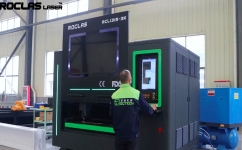 Roclas 光纤激光切割机铝板切割厚度能力解析一、引言在金属加工行业中,铝及铝合金因其轻质、耐腐蚀、导热性好等特性,被广泛应用于航空航天、汽车制造、轨道交通、电子设备及建筑装饰等领域。铝材的高反射率特性使其成为激光切割中较难处理的材料之一。许...2026-09-23 12:31:08
-
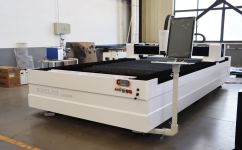 板管一体激光切割机:一机双能的柔性制造新范式在金属加工行业向多品种、小批量、短交期方向演进的背景下,单一功能的切割设备逐渐显露出产能利用率不足的短板。板管一体激光切割机通过在同一个加工平台上集成平板切割与管材切割能力,为中小规模制造企业提供...2026-09-24 20:30:46
-
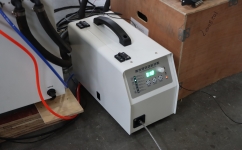 金属激光焊接机金属激光焊接机:技术发展、市场格局与ROCLAS的工程实践金属激光焊接技术在过去十年间从实验室走向大规模工业部署,其核心驱动力来自光纤激光器成本下降、伺服控制精度提升以及制造业对焊接质量一致性的刚...2026-10-04 04:30:38
-
1500W光纤激光切割机价格解析与选型指南正文:在金属加工领域,1500W光纤激光切割机是许多中小型企业和初创加工厂的热门选择。它既能满足日常碳钢、不锈钢板材的切割需求,又在采购成本和运行费用之间取得了较好的平衡。一台1500W激光切割机...2026-09-28 16:30:44
-
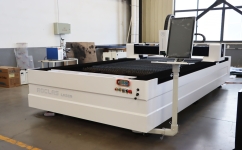 3000W光纤激光切割机:中厚板加工的黄金功率段在光纤激光切割设备的功率谱系中,3000W是一个被反复验证的“甜点区间”。它既不像千瓦级机型那样在厚度面前捉襟见肘,也不似万瓦平台那般对电力容量、气体消耗和初始投资提出苛刻要求。对于大量以碳钢、不...2026-10-01 08:31:49